In 2023, the U.S. Surgeon General did something unusual: he issued a public health advisory not about a virus or a drug, but about loneliness. That report, Our Epidemic of Loneliness and Isolation, found that about one in two American adults report experiencing loneliness. It also concluded that lacking social connection can be as harmful to health as smoking up to 15 cigarettes a day.
It might seem like a stretch to connect that to a nail salon. We don't think it is. Here's why, and how we designed LaVina to be a place where connection feels easy, and where quiet is welcome too.
Why social connection is a health issue
The Surgeon General's advisory drew on decades of research. Among its findings, poor social connection was linked to about a 29% higher risk of heart disease and a 32% higher risk of stroke, and in older adults, a roughly 50% higher risk of developing dementia.
One of the most-cited studies behind those numbers is a 2010 meta-analysis in PLOS Medicine by Julianne Holt-Lunstad and colleagues. Pooling 148 studies with more than 300,000 participants, they found that people with stronger social relationships had about a 50% greater likelihood of survival over the study periods.
The power of "weak ties"
When we think about connection, we usually think of best friends and family. But research suggests the small, friendly interactions in between matter too.
In a 2014 study in Personality and Social Psychology Bulletin, psychologists Gillian Sandstrom and Elizabeth Dunn found that people reported greater well-being and belonging on days they had more interactions with weak ties: acquaintances, regulars, the barista who knows your order. In a separate 2014 study, published in Social Psychological and Personality Science, the same researchers found that people who chatted briefly with a coffee shop cashier left in a better mood than those who kept the transaction efficient.
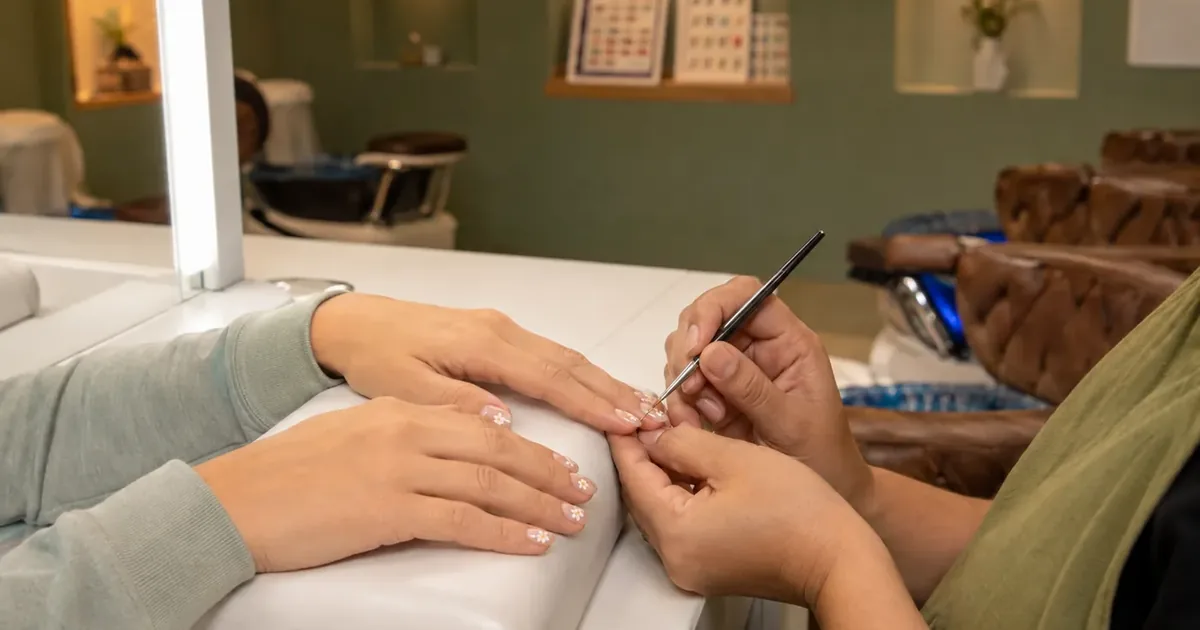
A salon is full of weak ties: the technician who remembers your kid's name, the regular in the next pedicure chair, the friend of a friend at a Sunday event.
"Third places," and why we need them
In his 1989 book The Great Good Place, sociologist Ray Oldenburg described third places: spaces separate from home (the first place) and work (the second) where people gather informally. Think of cafés, barbershops, libraries, and neighborhood hangouts. Third places are accessible, welcoming, and conversation-friendly, and they give communities a sense of identity.
Oldenburg worried that modern life was eroding them. Remote work, long commutes, and screen-based socializing have only accelerated that trend.
Community doesn't mean everyone is the same
Here's where we part ways with the idea that every space should be loud and social. Psychologist Hans Eysenck's research on personality suggested that introverts and extroverts differ in how much stimulation feels comfortable. For some guests, lively conversation is the whole point. For others, a salon visit is precious alone time.
At LaVina, our community isn't built on everyone being the same. It's created when unique individuals feel comfortable being themselves together. So we design for both:
- The bar: a social spot to chat with friends, meet new people, and share design ideas.
- The pedicure lounge: arranged so groups can sit together and talk.
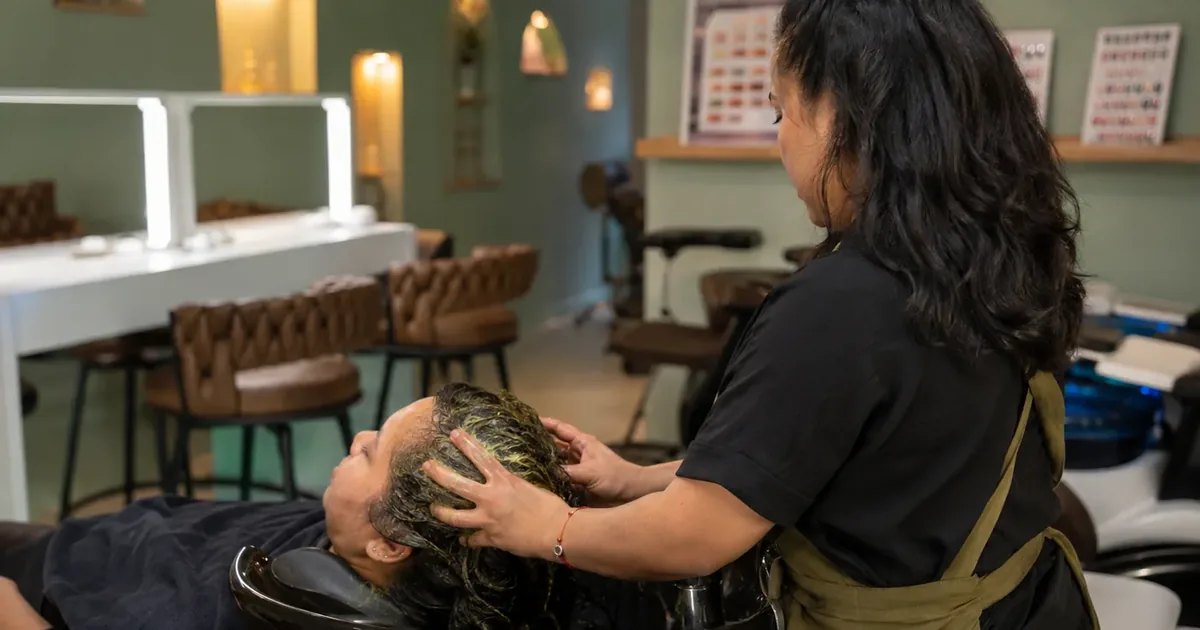
- Quiet areas: calmer spaces for guests who want to relax without feeling pressured to socialize. Head spa, in particular, is a deeply quiet experience.
When you book, just let us know whether you're in a social mood or a quiet one, and we'll seat you accordingly.
Light sets the mood
Our space follows a simple principle: simple structures create the foundation, light creates the mood, and images tell the story.
This isn't just aesthetics. In 2002, researchers publishing in Science identified a class of light-sensitive cells in the eye (intrinsically photosensitive retinal ganglion cells) that respond most strongly to blue-rich light and help regulate our circadian rhythms and alertness. In general, brighter, cooler light tends to feel energizing, while dimmer, warmer light supports winding down.
So instead of expensive permanent décor, LaVina uses layered, programmable LED lighting that shifts with the time of day, events, and seasons. Brighter, livelier settings suit social zones and events; warmer, softer light fills quiet areas. LED displays and replaceable artwork let us refresh the space for new collections and campaigns while reducing waste.
Events that bring people together
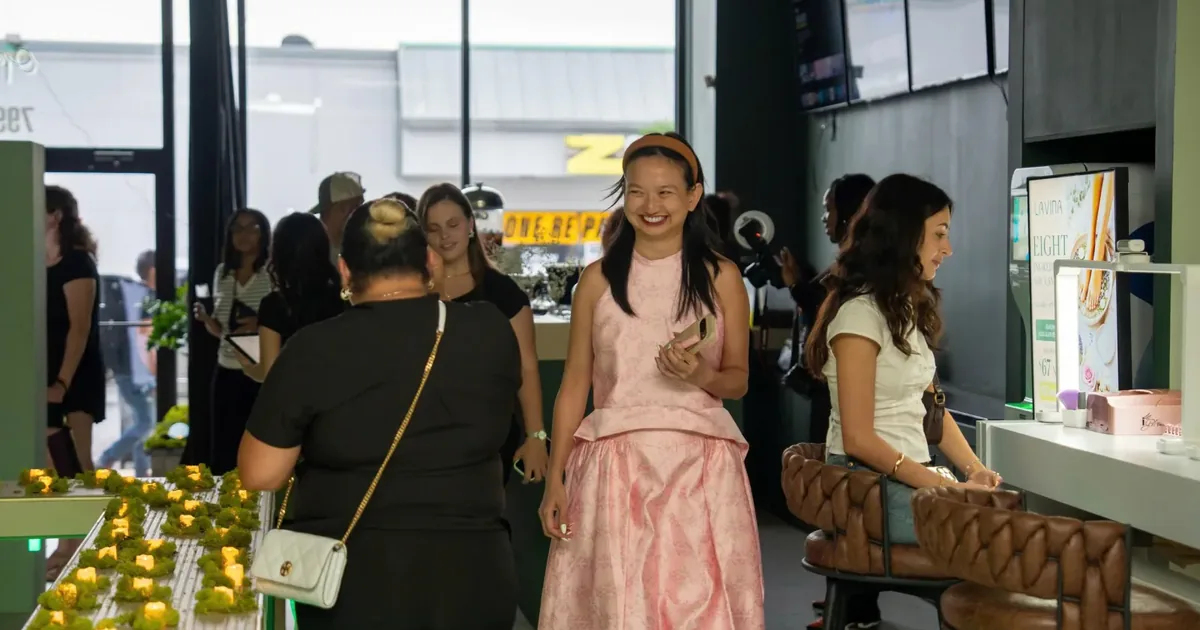
We host community events throughout the year. Our recent Brunch, Bonding & Beautiful Nails event paired manicures and pedicures with brunch and signature mocktails and cocktails, and it was exactly the kind of afternoon a third place is made for. Keep an eye on our events page for what's next, and ask us about group bookings for birthdays, bridal parties, and girls' nights.
Find your place in Hyattsville
LaVina Nail & Spa is at 7990 New Hampshire Ave, Hyattsville, MD 20783, a neighborhood spot for Langley Park, Takoma Park, Silver Spring, Adelphi, and College Park. Hours: Monday–Saturday 10 AM–8 PM, Sunday 11 AM–6 PM. Call (301) 234-5000.
Frequently Asked Questions
What is a third place?
A third place is a social space separate from home and work, such as a café, library, barbershop, or salon, where people gather informally and build a sense of community. The term comes from sociologist Ray Oldenburg's 1989 book The Great Good Place.
Can I book a group nail party in Hyattsville?
Yes. LaVina hosts community events and welcomes groups for birthdays, bridal parties, and friends' outings. Contact us at (301) 234-5000 to plan a group visit.
I'm an introvert. Will I feel pressured to chat?
Not at all. LaVina has quiet areas designed for guests who want to relax without socializing. Let us know your preference and we'll seat you in a calm spot.
Why does lighting matter in a salon?
Light affects mood and alertness through specialized cells in the eye that help regulate circadian rhythms. Brighter, cooler light tends to feel energizing, while warmer, dimmer light feels relaxing, so we use programmable lighting to match each space and moment.
References
- Office of the U.S. Surgeon General. Our Epidemic of Loneliness and Isolation: The U.S. Surgeon General's Advisory on the Healing Effects of Social Connection and Community. 2023.
- Holt-Lunstad J, Smith TB, Layton JB. Social relationships and mortality risk: a meta-analytic review. PLoS Med. 2010;7(7):e1000316.
- Sandstrom GM, Dunn EW. Social interactions and well-being: the surprising power of weak ties. Pers Soc Psychol Bull. 2014;40(7):910–922.
- Sandstrom GM, Dunn EW. Is efficiency overrated? Minimal social interactions lead to belonging and positive affect. Soc Psychol Personal Sci. 2014;5(4):437–442.
- Oldenburg R. The Great Good Place. Paragon House; 1989.
- Eysenck HJ. The Biological Basis of Personality. Charles C. Thomas; 1967.
- Berson DM, Dunn FA, Takao M. Phototransduction by retinal ganglion cells that set the circadian clock. Science. 2002;295(5557):1070–1073.