Walk down any beauty aisle and you'll see bottles labeled "clean," "non-toxic," "10-free," even "21-free." It sounds reassuring. But which of those claims actually matter for your health, and which are marketing math? This guide cuts through the labels and focuses on the ingredient issue dermatologists are most concerned about in gel manicures today: acrylate allergy.
"Non-toxic" has no legal definition
In the United States, the FDA does not define terms like "non-toxic," "clean," or "natural" for cosmetics. Most cosmetic ingredients, apart from color additives, don't require FDA approval before a product goes on sale.
That's slowly changing. The Modernization of Cosmetics Regulation Act of 2022 (MoCRA) gave the FDA new authority, including requirements for safety substantiation, adverse-event reporting, and facility registration. It's the biggest update to U.S. cosmetics law since 1938, but it still doesn't create a legal standard for "clean."
What the "X-free" numbers mean
The "free" count started with a real concern. The original 3-free label meant a polish contained no toluene, formaldehyde, or dibutyl phthalate (DBP), sometimes called the "toxic trio." Over time, brands added more exclusions:
| Label | Typically excludes |
|---|---|
| 3-free | Toluene, formaldehyde, dibutyl phthalate (DBP) |
| 5-free | Above + formaldehyde resin, camphor |
| 7-free and up | Above + ingredients such as TPHP, xylene, parabens (varies by brand) |
| 10-free, 16-free, 21-free | Brand-defined lists; not standardized |
There's no official definition past 3-free, so a higher number isn't automatically a safer product. And here's the gap: most "free" lists were written for regular air-dry polish. Gel polish carries a different, more relevant risk.
The real issue in gel: acrylate allergy
Gel polish hardens when light triggers molecules called (meth)acrylate monomers to link together. Before curing, some of these monomers, especially HEMA (2-hydroxyethyl methacrylate), are potent skin sensitizers.
The evidence has built steadily:
- The American Contact Dermatitis Society named acrylates its "Allergen of the Year" in 2012.
- In 2018, the British Association of Dermatologists issued a public warning about rising acrylate allergies linked to gel and acrylic nails, particularly DIY home kits.
- In 2019, HEMA was added to the European baseline patch-test series, the standard panel dermatologists use to screen for contact allergies, because it was turning up so often.
The key detail: allergy develops through repeated contact between uncured gel and skin. Once someone is sensitized, the allergy is usually lifelong. Symptoms can include itchy, swollen, or blistered fingertips, nails lifting from the nail bed, and even rashes on the eyelids or face from touching them. The BAD also noted that people sensitized through nails may later react to acrylates used in dental work and some medical devices.
Where regulation is heading
European regulators have moved faster than the U.S.:
- Since 2021, the EU has restricted HEMA and a related compound (Di-HEMA trimethylhexyl dicarbamate) in artificial-nail products to professional use only, with a required allergy warning.
- As of September 2025, the EU banned TPO (trimethylbenzoyl diphenylphosphine oxide), a common photoinitiator in gel polish, after it was classified as a reproductive toxicant.
These rules don't apply in Maryland, but they're a useful signal of which ingredients deserve a closer look.
What "plant-based" or "bio-sourced" actually means
"Bio-sourced" usually refers to the percentage of a formula's carbon that comes from renewable plant sources rather than petroleum. It's a genuine sustainability benefit, but it doesn't automatically mean hypoallergenic. A plant-derived acrylate is still an acrylate. The right question is always: what's the allergen profile, and how is it applied?
Why LaVina chose Manucurist Green Flash
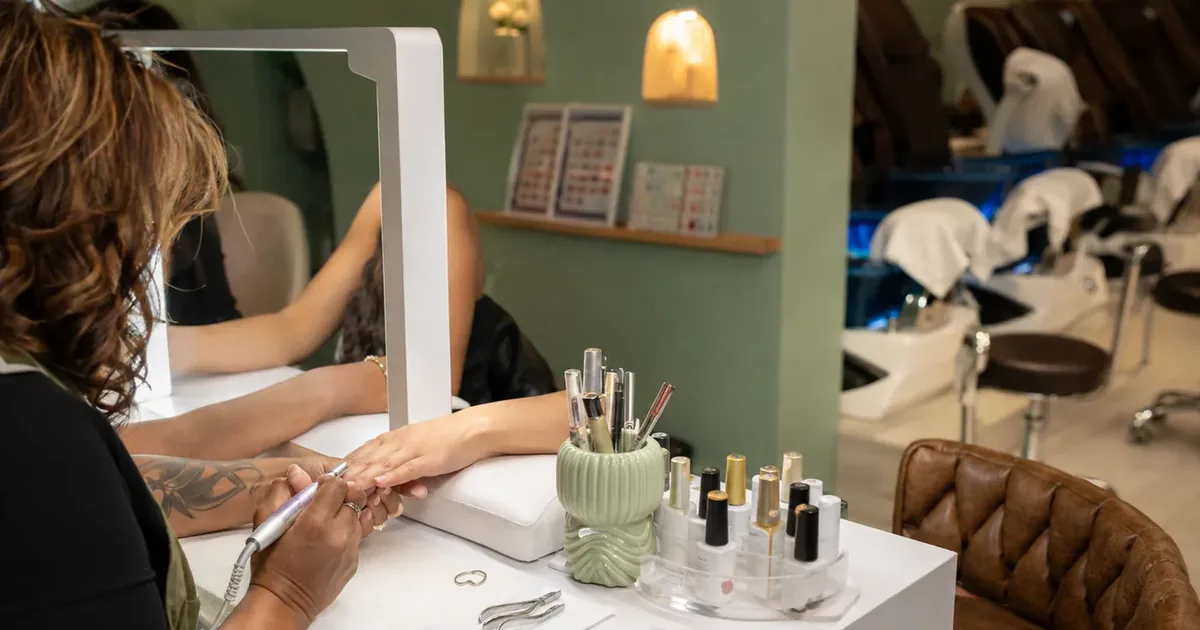
We prioritize Manucurist Green Flash, a French-made, LED-cured gel polish system that the brand describes as formulated with a high percentage of bio-sourced ingredients. We chose it because it aligns with our first brand principle: protect and preserve the natural condition of your nails. It is also designed to remove more gently than many traditional gels, which means less soaking and less scraping.
Just as important is how we apply it:
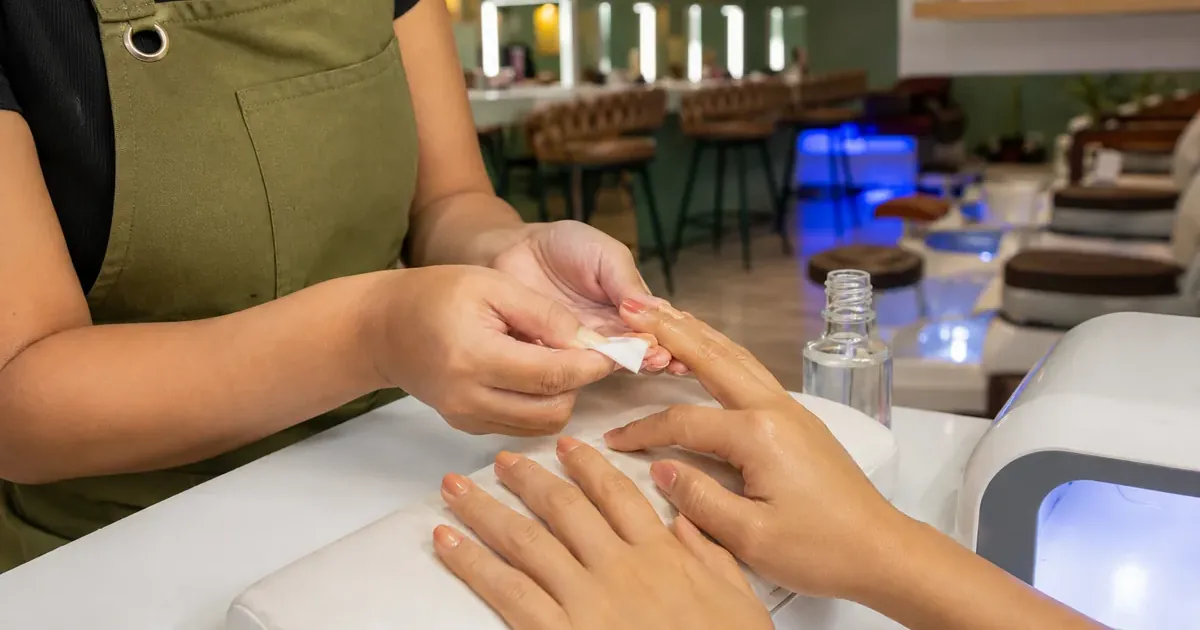
- Product never touches the skin or cuticle. If it does, it's wiped away before curing.
- Every layer is fully cured with a matched LED lamp, because under-cured gel leaves reactive monomer on the nail.
- Removal is always gentle soak-off, never peeling.
- We ask about past reactions before your first gel service.
If you've ever had itchy or swollen fingertips after a gel manicure, tell us before your appointment. We'll recommend a non-gel option and encourage you to see a dermatologist for patch testing.
Visit a wellness-first nail salon in Hyattsville
LaVina Nail & Spa is at 7990 New Hampshire Ave, Hyattsville, MD 20783, near Takoma Park, Silver Spring, Langley Park, Adelphi, and College Park. Open Monday–Saturday 10 AM–8 PM, Sunday 11 AM–6 PM. Call (301) 234-5000 or browse our services.
Frequently Asked Questions
What does 10-free nail polish mean?
It means the brand has excluded ten ingredients it considers undesirable. Only "3-free" (toluene, formaldehyde, DBP) has a widely shared meaning; higher numbers are defined by each brand and aren't standardized.
What is HEMA and why does it matter?
HEMA is a methacrylate monomer used in many gel polishes. In its uncured form it can cause allergic contact dermatitis, and once you're sensitized the allergy is usually permanent. Careful application that keeps gel off the skin reduces risk.
Can you suddenly become allergic to gel nails?
Yes. Acrylate allergy often develops after months or years of exposure, typically from uncured gel touching the skin. Common signs include itchy or swollen fingertips and nails lifting after a service.
Is plant-based gel polish safer?
Plant-based or bio-sourced formulas reduce reliance on petroleum, which is a sustainability benefit. Safety still depends on the specific ingredients and on proper application and curing.
References
- U.S. Food and Drug Administration. Modernization of Cosmetics Regulation Act of 2022 (MoCRA). fda.gov.
- Sasseville D. Acrylates. Contact Allergen of the Year 2012. Dermatitis. 2012;23(1):3–5.
- British Association of Dermatologists. Press release on acrylate allergy and nail products (2018). bad.org.uk.
- Wilkinson M, et al. The European baseline series and recommended additions: 2019. Contact Dermatitis. 2019;80(1):1–4.
- European Commission. Commission Regulation (EU) 2020/1682 (HEMA and Di-HEMA TMHDC in nail products).
- European Commission. Commission Regulation (EU) 2025/977, Omnibus Act VII (CMR substances), including trimethylbenzoyl diphenylphosphine oxide (TPO), applicable September 1, 2025.