Waking up with full, defined lashes and skipping mascara for weeks is a real time-saver, which is why lash extensions have become a staple beauty service. They're also a service performed millimeters from your eyes, using an adhesive that has to hold through showers, workouts, and sleep. The difference between a set that looks great and protects your natural lashes and one that causes irritation or lash loss comes down to a few details. Here's what to know before you book.
Your natural lashes, briefly
Most people have roughly 90 to 160 lashes on the upper lid and fewer on the lower lid. Like the hair on your head, each lash goes through a growth cycle: an active growth phase, a short transition, and a long resting phase before it sheds and a new lash replaces it. The full cycle lasts about three months, and it's normal to shed a few lashes every day.
That cycle explains two things about extensions:
- Why you need fills. Each extension is attached to one natural lash, so it falls out when that lash sheds naturally. Fills every two to three weeks replace what's been lost.
- Why weight matters. An extension that's too long or heavy for the natural lash puts stress on the follicle. Over time, repeated strain can contribute to traction alopecia, a type of hair loss caused by pulling.
What's in lash adhesive
Most professional lash adhesives are based on cyanoacrylate, the same family of fast-bonding chemistry found in medical and industrial glues. As it cures, it can release small amounts of vapor, including trace formaldehyde, which is why fumes can sting the eyes and why good technique keeps the eyes fully closed.
Two issues matter most:
- Irritation. Fumes or adhesive that touches the skin or eye can cause redness, watering, and discomfort.
- Allergy. Some people develop an allergic reaction to the adhesive, with swollen, itchy, or red eyelids, often a day or two after an appointment.
Japan, where lash extensions became popular early, has documented these risks. A 2012 study in the journal Cornea reviewed 107 women seen at eye clinics in Japan between 2007 and 2010 for eye problems after eyelash extensions: 64 had keratoconjunctivitis (irritation of the cornea and conjunctiva) from the glue or glue remover, and 42 had allergic blepharitis (eyelid inflammation) from the glue. Every glue the researchers analyzed contained formaldehyde. The cases were largely associated with adhesive exposure and improper application, which is exactly what careful technique prevents.
Why humidity matters, especially in Maryland
Cyanoacrylate cures by reacting with moisture in the air. That makes humidity a hidden variable in lash work:
| Room humidity | What happens to adhesive | Result |
|---|---|---|
| Too low (dry winter air) | Cures slowly | More time for fumes; weaker early bond |
| Balanced (often cited around 40–60%) | Cures predictably | Strong bond, minimal irritation |
| Too high (humid summer days) | Cures too fast ("shock" cure) | Brittle bond, extensions shed sooner |
Maryland swings from muggy summers to dry, heated winters, so a skilled lash artist adjusts adhesive choice and technique to the season and monitors the room.
Your safety checklist
- Choose a trained, licensed professional who works in a clean, well-lit space.
- Ask for a patch test if you have sensitive skin, allergies, or are new to extensions.
- Keep your eyes closed throughout application, with under-eye pads protecting your lower lashes.
- Speak up if you feel stinging, burning, or watering. That's a signal to pause and ventilate.
- Skip or postpone extensions if you have an eye infection, active blepharitis, or recent eye surgery, and check with your eye doctor.
- Never pull extensions off. Professional removal protects your natural lashes.
Aftercare that makes your set last
- Avoid water, steam, and saunas for the first 24 hours while the adhesive fully sets.
- Cleanse lashes gently every day or two with an oil-free lash cleanser. Clean lashes last longer and reduce the risk of irritation.
- Brush lashes gently with a clean spoolie each morning.
- Avoid oil-based makeup removers and waterproof mascara on the extensions.
- Try not to sleep face-down on your lashes.
- Book fills every 2–3 weeks.
If you notice significant swelling, pain, discharge, or vision changes, contact an eye doctor promptly.
Lash extensions at LaVina
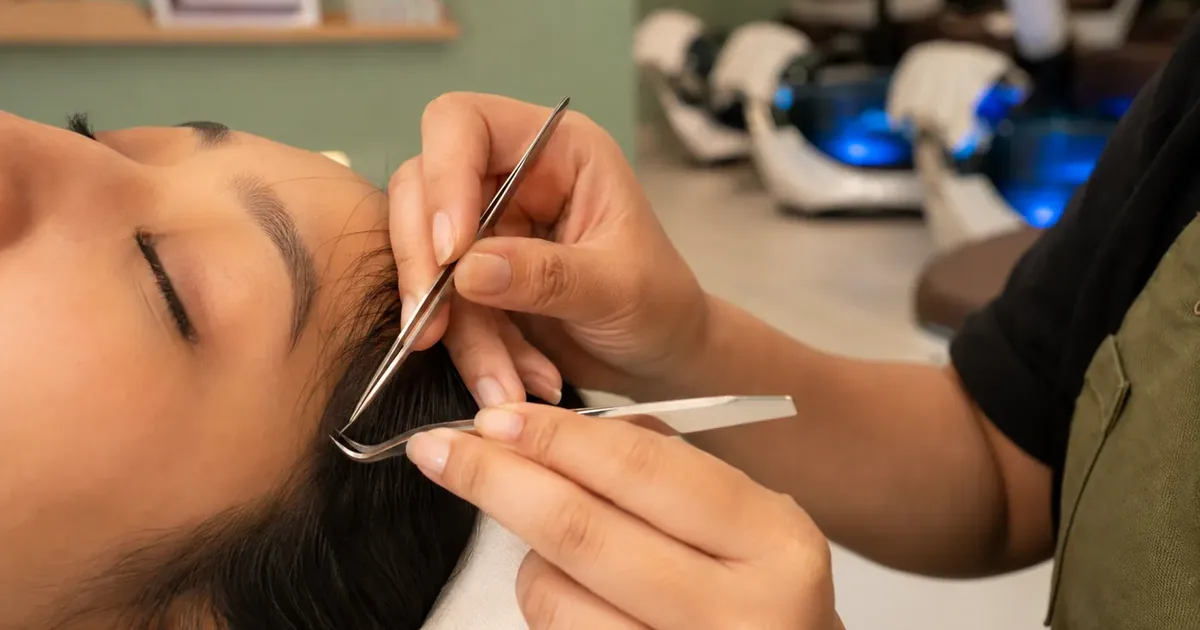
Our approach to lashes follows the same principle as everything we do: protect and enhance your natural features. That means matching extension weight to your natural lashes, keeping adhesive away from skin, and designing a look that fits your eye shape and personal style. Choose from classic, hybrid, or volume sets, and tell us the look you want, from barely-there to full glam.
Lash appointments take place in a calm, quiet setting, so you can close your eyes and truly rest.
Book lash extensions in Hyattsville
LaVina Nail & Spa is at 7990 New Hampshire Ave, Hyattsville, MD 20783, near Takoma Park, Silver Spring, Langley Park, Adelphi, and College Park. Hours: Monday–Saturday 10 AM–8 PM, Sunday 11 AM–6 PM. Call (301) 234-5000 or view our lash menu.
Frequently Asked Questions
Do lash extensions ruin your natural lashes?
Properly applied extensions that match the strength of your natural lashes shouldn't damage them. Problems usually come from extensions that are too heavy, adhesive on the skin, or pulling extensions off instead of having them professionally removed.
How long do eyelash extensions last?
Extensions last as long as the natural lash they're attached to. Because lashes shed naturally, most people book fills every two to three weeks to keep their set full.
Can you be allergic to eyelash extension glue?
Yes. Some people react to cyanoacrylate-based adhesives with itchy, red, or swollen eyelids. A patch test before your first full set can help, and anyone with a known reaction should talk with an eye doctor.
Can I get lash extensions wet?
Avoid water and steam for the first 24 hours after application. After that, gentle daily cleansing with an oil-free lash cleanser helps your extensions last longer.
References
- Amano Y, Sugimoto Y, Sugita M. Ocular disorders due to eyelash extensions. Cornea. 2012;31(2):121–125.
- Thibaut S, De Becker E, Caisey L, et al. Human eyelash characterization. Br J Dermatol. 2010;162(2):304–310.
- American Academy of Ophthalmology. Eyelash extensions: safety and risks. aao.org.
- U.S. Food and Drug Administration. Eye cosmetic safety. fda.gov.